Rolex Daytona vs. the S&P 500: Hype, Scarcity, and the 2022 Peak
The Daytona became the poster child of watch-market mania. Its rise looks dramatic. Its comedown does too.
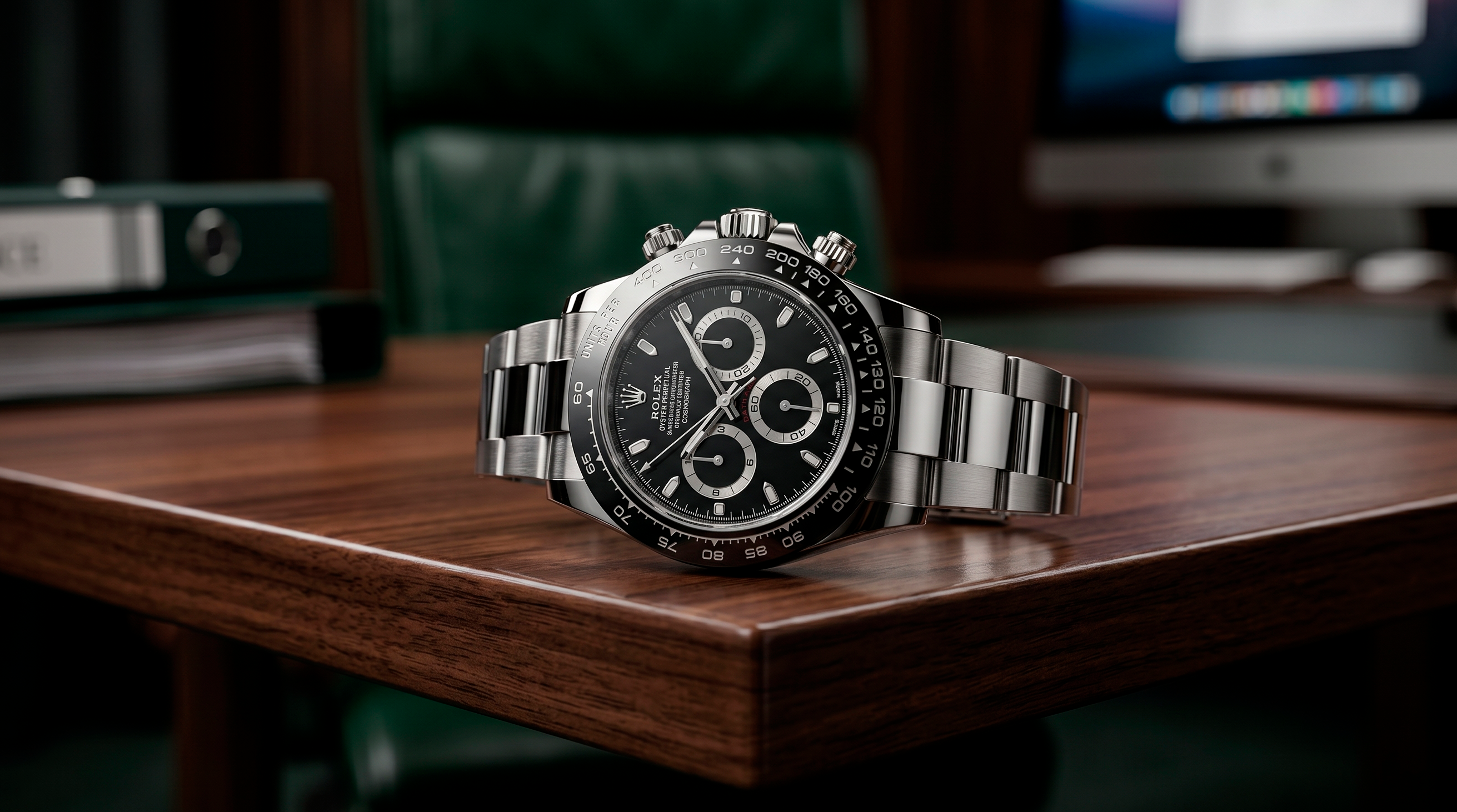
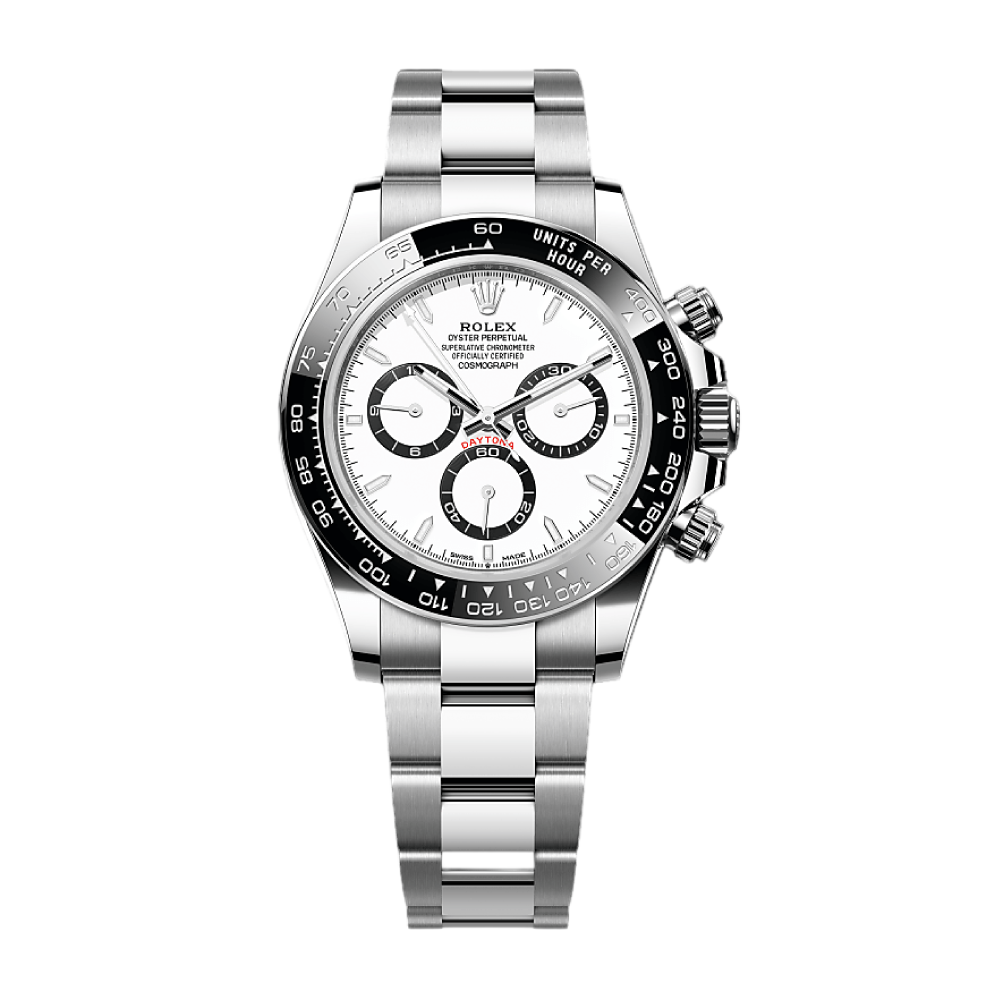
The Rolex Daytona 116500LN did not need the 2020s to become desirable. It was already one of the most coveted modern watches on the planet.
What changed was the intensity of the market around it.
By the early 2020s, the Daytona had become more than a watch. It was a waiting-list legend, a social flex, a speculative resale object, and a chart that made sensible people say things like “that cannot possibly continue” while it continued a little longer.
Then it cooled.
What the chart shows
Daytona
S&P 500
Rolex Daytona vs. the S&P 500: Hype, Scarcity, and the 2022 Peak
The Splurge Index chart compares the Rolex Daytona 116500LN with SPY from 2016 to 2026.
The Daytona series begins in late 2016 and shows a clear build, a dramatic run-up into the 2021–2022 period, and a later reset from those highs. SPY moves through a more conventional public-market arc, which is exactly why the comparison works. One is an equity benchmark. The other is a luxury object that temporarily behaved like a momentum asset.
The point is not that one chart is “more correct.” The point is that they reveal very different forms of risk.
Why the Daytona became the watch
Daytona
S&P 500
Rolex Daytona · 2016
~$19k→~$32k
S&P 500 · 2016
~$185→~$734
Several forces converged around the Daytona.
It was already Rolex’s most mythologized sports watch. The ceramic-bezel 116500LN arrived with instant demand. Supply was constrained. Authorized-dealer availability was famously difficult. Pre-owned prices moved well above retail. That gap between official price and real-world access became part of the story.
By the pandemic era, luxury watches also benefited from:
unusually strong spending on collectible goods,
social-media visibility,
low-rate speculative behavior,
and a broader sense that certain scarce luxury objects “only went up.”
The Daytona did not create that environment. It became its cleanest symbol.
The 2022 peak matters because it broke the fantasy
The watch market’s peak was not limited to Rolex. Broader luxury-watch indices surged and later fell meaningfully from their highs. That cooling is important because it separates lasting desirability from peak-cycle pricing.
The Daytona remains desirable. The question is whether every price paid during the frenzy was durable. The chart suggests not.
That does not diminish the watch. It clarifies the market. Scarcity can support pricing. Speculation can exaggerate it. When both happen at once, the curve gets theatrical.
What the S&P 500 comparison clarifies
Against SPY, the Daytona looks more dramatic in both directions.
That is the entire value of the comparison. The S&P 500 does not offer the same thrill. It does not have a ceramic bezel or a boutique waitlist. It also does not require a buyer to guess whether a secondary-market premium is temporarily euphoric.
Public markets can absolutely be volatile. But the structure is different:
liquidity is higher,
pricing is continuous,
exposure is diversified,
and exits are simpler.
The Daytona’s price history is fascinating. SPY’s structure is cleaner.
So did the Daytona beat the market?
Over some windows, the Daytona’s price appreciation is astonishing. Over others, the drawdown from peak resale valuations matters more. The answer changes with the starting date, which is why this chart is more interesting with a movable timeframe than with a single bragging-rights headline.
The deeper insight is not “watches beat stocks” or “stocks beat watches.” It is that scarcity-driven luxury can produce public-market-sized narratives without public-market mechanics.
The takeaway
The Rolex Daytona earned its comparison with the S&P 500 because its price story became too large to ignore.
It shows what happens when a genuinely iconic product meets constrained supply, cultural obsession, and a speculative market cycle. The rise was real. The cooling was real. The desirability never fully disappeared.
The chart does not tell you what to buy. It tells you why the Daytona became one of the defining luxury-price stories of the last decade.